
At Ace’s Garage Door Repair & Installation, we hear this from San Francisco homeowners every day. Most failures trace back to four specific problems — each with a clear cause.
A garage door opener stops working due to a power failure, faulty sensors, broken springs, or a worn motor. San Francisco’s coastal fog and salt air speed up wear on all of these components. Identifying the cause early keeps a small problem from becoming a costly one.
 What Causes a Garage Door Opener to Stop Working?
Most failures fall into one of four categories:
- Power loss – unplugged unit, tripped breaker, or dead outlet.
- Remote/wall control failure – dead batteries, locked panel, or faulty transmitter.
- Safety sensor issues – misaligned, blocked, dirty, or wet sensors.
- Broken springs/cables – doors won’t lift even if the motor runs.
- Opener failure – stripped gears, motor burnout, or circuit board fault.
What Problems Can Cause a Garage Door Opener to Fail?
Several issues can cause an opener to fail, ranging from simple power problems to major mechanical failures. Here are the most common causes to check first
Problem 1: Power and Remote Issues
An opener with zero response is commonly caused by a power issue, although failed circuit boards, damaged wiring, or control system faults may also be responsible.
Check these first:
- Confirm the unit is plugged in and the outlet has power
- Test the wall button — if it works but the remote doesn’t, the remote is the issue
- Replace remote batteries and re-pair if needed
- Check your breaker panel for a tripped circuit
A weak battery or damaged antenna wire causes an inconsistent remote response. The antenna should hang straight down from the motor head.
Problem 2: Misaligned or Faulty Safety Sensors
A door that reverses before closing or won’t close points to the safety sensors.
Common causes:
- Dirty or moisture-fogged lens — wipe clean with a dry cloth
- Sensor bumped out of alignment
- Fog or condensation inside the sensor housing
If cleaning and realigning don’t resolve it, the sensor needs replacement.
Problem 3: Broken Springs or Cables
An opener that hums but won’t move the door may indicate a broken torsion spring, stripped drive gear, disengaged trolley, or another mechanical failure.
Springs and cables carry the full weight of the door. Without them, the motor cannot lift it and risks burning out.
Signs to watch for:
- A loud bang from the garage when the spring snaps
- Door sitting crooked or uneven in the frame
- A visible gap in the spring coil above the door
Broken springs should be repaired by a qualified garage door professional because torsion springs are under extreme tension and can cause serious injury.
Problem 4: Worn or Failed Opener Motor
A motor that overheats, grinds, or runs without moving the door has reached the end of its life.
Many garage door openers last 10–15 years or longer, depending on usage, maintenance, and environmental conditions. Salt air and humidity in San Francisco corrode internal parts faster.
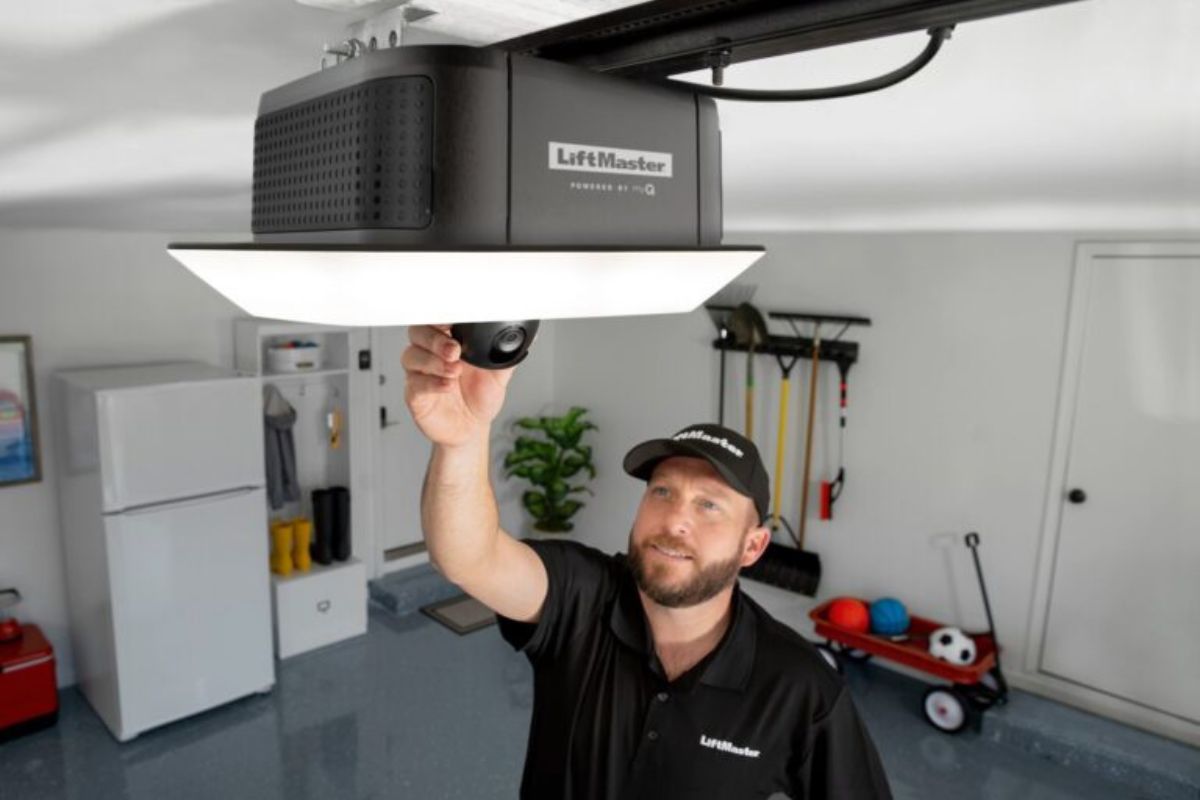
A LiftMaster garage door opener with a sealed motor housing handles coastal conditions better. When a major component fails on an opener that is more than 10 years old, homeowners should compare repair costs with replacement costs to determine the best value.
Our team at Ace’s Garage Door Repair & Installation specializes in garage door opener repair and strives to provide same-day service whenever scheduling permits.
Quick Reference: Common Problems and Their Causes
| Problem | Most Likely Cause |
| No response from opener | Power outage, tripped breaker, dead remote |
| Door reverses before closing | Misaligned or dirty safety sensors |
| Opener hums, door won’t move | Broken torsion spring |
| Grinding or slow operation | Worn drive gear, belt, or chain |
| Intermittent failure in fog or rain | Sensor moisture or a corroded circuit board |
 FAQ
Can I use my garage door manually if the opener fails?
Yes. Pull the red emergency release cord to disconnect the opener and lift the door by hand. Only do this when the door is fully closed.
Should I repair or replace my opener?
Repair is best for newer units with minor issues. Replace older openers with failed motors or circuit boards for better long-term value.
How does San Francisco fog affect garage door openers?
Moisture can cause rust, sensor issues, and circuit damage. Regular maintenance helps prevent weather-related failures.
Get Same-Day Garage Door Opener Repair in San Francisco
Small issues can quickly turn into major garage door opener San Francisco, CA services if they are not addressed early.
Call Ace’s Garage Door Repair & Installation at (510) 706-2144 or email at [email protected] to schedule an appointment.