
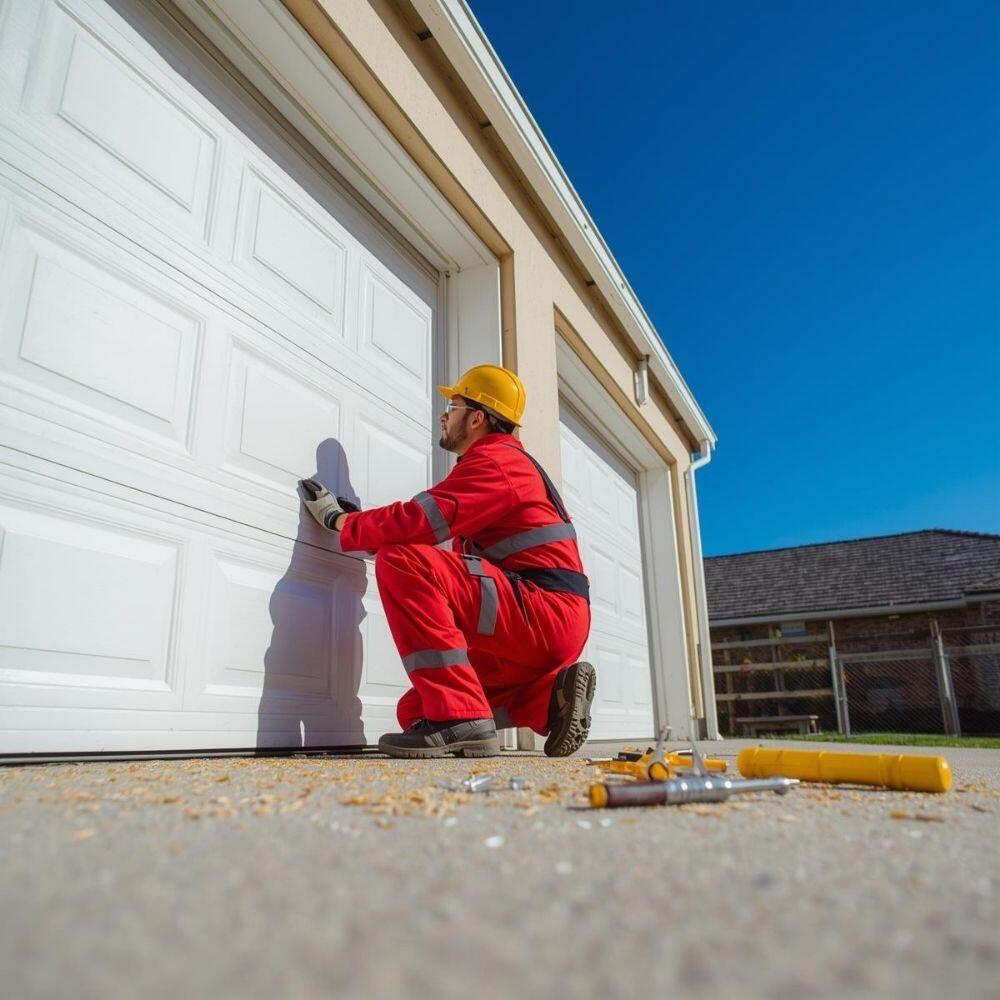
Several mechanical issues can cause a garage door to move slowly or unevenly, including worn rollers, track problems, and spring issues. San Francisco’s coastal climate can accelerate corrosion and wear on metal garage door components because of frequent moisture, fog, and salt air exposure.
At Ace’s Garage Door Repair & Installation, we’ve handled garage door repair calls across San Francisco since 2009. The same causes come up repeatedly — and most start small before turning into costly repairs.
 Why Is My Garage Door Moving Slowly?
A garage door slows down when its parts are worn, dirty, or misaligned. The door depends on springs, cables, rollers, tracks, and an opener motor, all working together. When one part fails, the whole system feels it.
One of the most common issues technicians encounter is inadequate lubrication combined with corrosion caused by moisture and coastal air exposure.
What Are the Main Causes of a Slow or Jerky Garage Door?
A slow or jerky garage door is usually caused by worn parts, poor alignment, or issues with the door’s balance system. Identifying the problem early can prevent further damage and costly garage door repairs.
1. Worn or Dirty Rollers
Rollers guide the door along its track. Nylon rollers crack over time. Steel rollers collect debris either way, the door drags, squeaks, or stutters.
- Standard nylon rollers generally last 7–12 years, while premium sealed-bearing nylon rollers may last significantly longer, depending on usage and maintenance.
- Salt air accelerates corrosion of metal components associated with both roller systems, including bearings, stems, and mounting hardware.
2. Misaligned or Bent Tracks
Tracks shift from vibration, impact, or a settling foundation.
Even a small gap between roller and track creates resistance, causing the door to jerk at the same spot every time.
3. Weakened or Unbalanced Springs
Torsion springs support most of the garage door’s weight. As they wear out, they lose tension, making the opener work harder and causing the door to move slowly, unevenly, or jerk during operation.
Because garage door springs are under high tension, avoid attempting repairs yourself. A trained garage door technician can safely inspect and replace worn springs to restore smooth operation.
4. Insufficient Lubrication
Many manufacturers and garage door professionals recommend lubricating moving components approximately every six months, especially in coastal environments where moisture exposure is common. San Francisco‘s fog draws moisture into metal, speeding up corrosion and stiffness.
- Use: white lithium grease or silicone spray for hinges, rollers, and springs.
- Avoid: WD-40 as a long-term lubricant for garage-door parts, since it is better for cleaning and loosening than for lasting lubrication.
5. Failing Opener Motor
An aging motor struggles with heavier insulated or wood doors.
Signs include inconsistent speeds, grinding sounds, or the door reversing mid-cycle with nothing in its path.
6. Loose or Frayed Cables
Garage door cables work together with the springs to lift and lower the door smoothly. When a cable becomes loose, stretched, or frayed, the door may become uneven, move slowly, or jerk, often worse on one side.
Quick check: Look for visible fraying, slack cables, or a door that appears tilted while opening or closing.
Since cables are under significant tension and connected to the spring system, avoid attempting repairs yourself. Schedule a professional garage door repair service to inspect and replace damaged cables.
How Does San Francisco’s Climate Make It Worse?
| Factor | Effect on Garage Door |
| Coastal salt air | Speeds up corrosion on metal rollers, springs, hinges, and tracks. |
| Morning fog and humidity | Adds moisture to metal parts, which can increase rust and make movement less smooth. |
| Temperature swings | Cause metal parts to expand and contract, which can loosen alignment over time. |
| Marine layer moisture | Breaks down rubber seals and weather stripping faster. |
Don’t ignore unusual garage door movement; our garage door repair company is here to restore safe, smooth operation.
FAQ
How do I know if the problem is my spring or my opener?
Slow movement, unusual noises, or frequent reversing may point to an opener issue. If the door looks uneven, hangs crooked, or one side moves differently, the springs or cables may be the problem. Since springs are under high tension, have a professional inspect them.
How often should a garage door be serviced in San Francisco?
Twice per year. A professional tune-up covers lubrication, balance testing, and a full hardware check.
 Get Same-Day Garage Door Repair in San Francisco
A slow or jerky door won’t improve on its own. Small issues become broken springs, snapped cables, or a door that won’t open.
Ace’s Garage Door Repair & Installation offers same-day garage door repair in San Francisco, CA. Our technicians are fully licensed, insured, and carry most parts in-house for fast repairs.
Call (510) 706-2144 or email [email protected] to get a free quote today.